Roofing Company Use Case: Storm Calls, Inspections, and an AI Front Desk
This is a practical use case for roofing contractors who see call volume spike after weather events and struggle to stay responsive without drowning the office.
It is a composite scenario, not a named company. The goal is to show how an AI front desk can tighten intake while keeping expectations honest—especially around inspections, paperwork, and what can only be answered after someone looks at the roof.
If you want the broader picture on missed calls, read why small businesses lose revenue when calls go unanswered.
The business in this example
Picture a residential roofing contractor running multiple crews and a small office that handles inbound leads, subcontractor coordination, supplements paperwork, and customer updates.
During calm weeks, phones are steady: repairs, replacements, maintenance checks, and warranty callbacks.
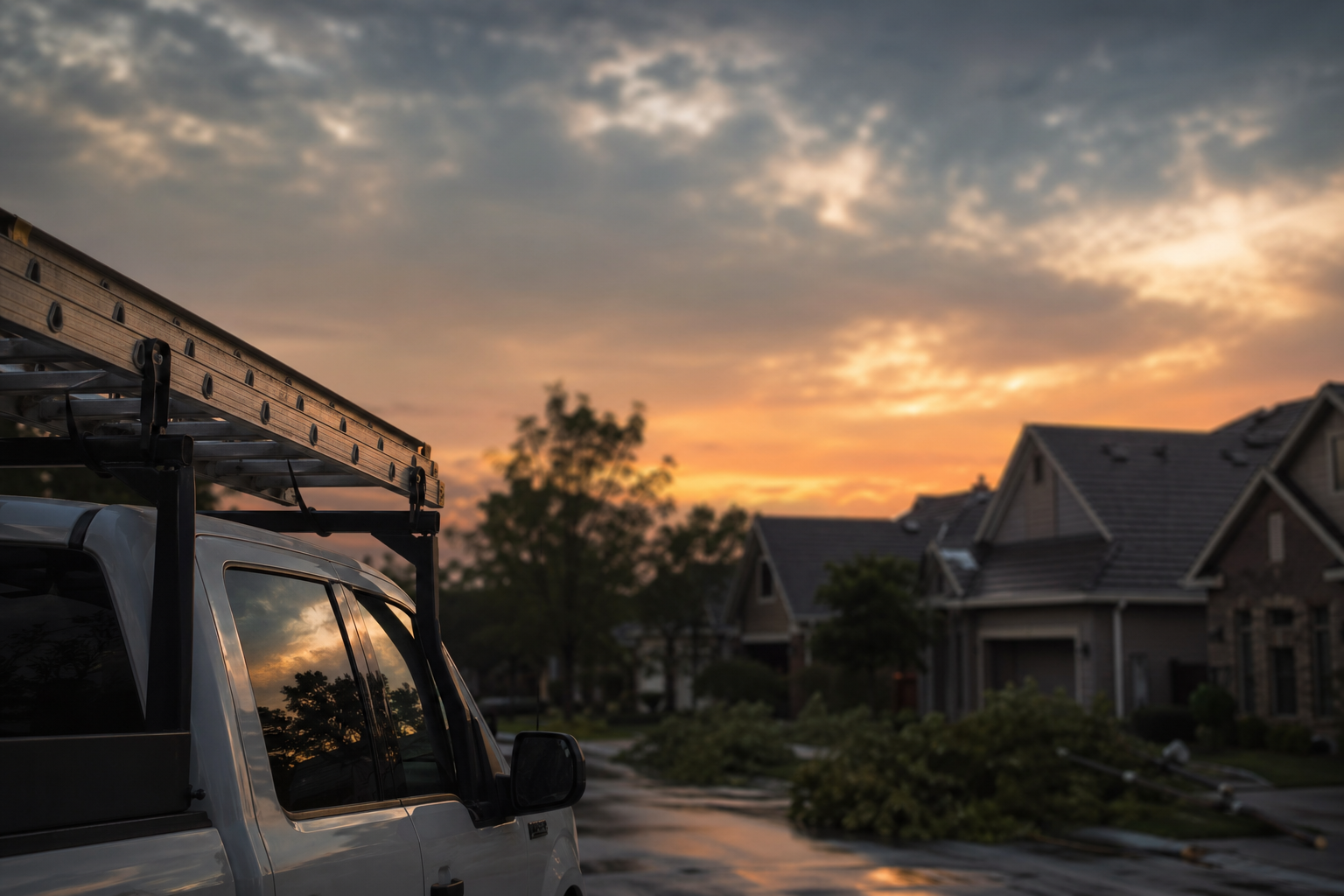
During storm weeks, the phone becomes an event pipeline: hail reports, dripping ceilings, insurance questions, urgent tarp requests, and comparison shoppers calling five companies at once.
That swing is predictable. What is harder to predict is how many callers you lose when voicemail becomes your default answering mode.
For after-hours behavior, see after-hours call handling for small business.
What callers usually want
Most calls fall into a few buckets.
Some callers want a fast reaction: visible leak, dripping stain, shingles in the yard, or concern after high wind.
Some callers want an inspection and a clear explanation of severity, timelines, and next steps—not a slogan.
Some callers are insurance-adjacent: they describe adjusters, documentation, timelines, or confusion about deductibles.
Some callers want pricing signal early, before they commit to letting anyone on the roof.
None of those desires are irrational. What breaks trust is vagueness.
Where roofing phones typically break down
In this scenario, the company struggles with a few repeatable failure modes.
Calls ring out during lunch, dispatch-heavy mornings, and post-storm surges.
Voicemail misses the details crews need quickly: precise address, what the homeowner sees, whether water is actively entering the living space, and whether pets or access issues matter.
Insurance-related questions balloon into conversations that belong with trained staff, yet the intake step still needs discipline so callers do not feel ignored.
Busy owners forward everything to cells, burn out by nightfall, then miss the next day's opportunities anyway.
Comparable trade workflows (without pretending roofing is identical) show up in our HVAC and plumbing use cases—same theme: responsiveness under peak load.
What a strong roofing front line should do early
Strong intake is less about sounding impressive and more about reducing ambiguity.
Homeowners want to know:
- whether they reached the right business for their problem
- what information you need before you can prioritize them
- what happens next after the call ends
- when a human will follow up if the issue cannot close on first contact
If you are newer to the AI front desk category, read what an AI front desk actually does and does not do.
How ZFire Front Desk fits a roofing workflow
ZFire Front Desk centers on Ziva as a voice-forward assistant that can answer common questions, capture structured details, and route callers based on rules you define.
In a roofing context, that might include:
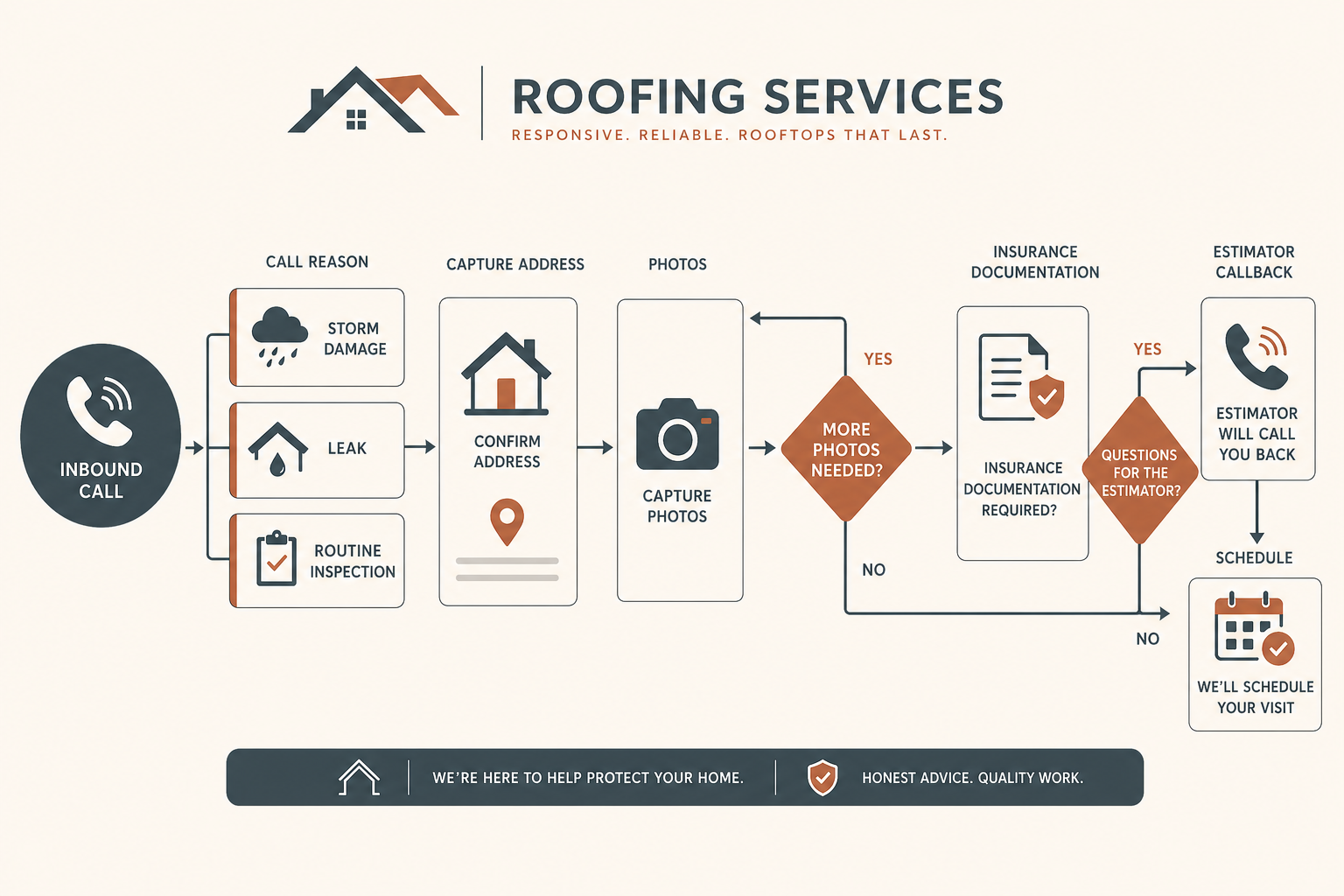
- collecting address, homeowner contact, leak status, storm timing, and whether water is actively intruding (as described by caller)
- helping callers understand your general process for inspections and scheduling, phrased the way your team wants it communicated
- routing language that implies interior damage or urgency toward escalation paths your office chooses
- supporting after-hours intake so surge volume does not become a voicemail wall
What it cannot do responsibly is estimate coverage, approve claim outcomes, interpret policy language like an adjuster, or promise repair timelines tied to unpredictable weather and permitting.
Your estimators still own scopes, ladders, workmanship decisions, subcontractor timelines, and the real conversation after someone sees the property.
Insurance-related topics are where honest boundaries tend to strengthen credibility more than scripted confidence.
Escalation that matches homeowner anxiety
Storm calls often carry panic.
The best setups route clear emergency language cleanly: active interior intrusion, collapsed areas, hazards from downed trees, electrical concerns near water—whatever your playbook defines.
For non-emergency leads, the win is still speed: capturing enough detail so your estimating team prioritizes wisely without playing phone tag for two days.
If your shop also overlaps electrical symptom language, escalation rules can mirror discipline from our electrical contractor use case.
How to evaluate fit for your shop
Useful questions include:
- what percentage of installs begin as phone-first leads
- how often voicemail slows inspection booking during surges
- what facts estimators insist on having before prioritizing dispatch
- which questions always require a specialist staff member
For workflow detail, read how it works. For packaging, see pricing.
Take the next step
If you want to explore whether ZFire Front Desk could match your call patterns and escalation rules, contact ZFire Media.
If you want to hear how Ziva sounds first, visit the homepage and talk to Ziva.
Learn more about ZFire Media and how we work with call-heavy small businesses.