Electrical Contractor Use Case: Calls, Safety Language, and an AI Front Desk
This is a practical use case for residential and light commercial electrical contractors that run on the phone.
It is a composite scenario, not a named company. The goal is to show how an AI front desk can support intake and routing without replacing licensed judgment, field diagnosis, or dispatch planning.
If you want the broader picture on missed calls, read why small businesses lose revenue when calls go unanswered.
The business in this example
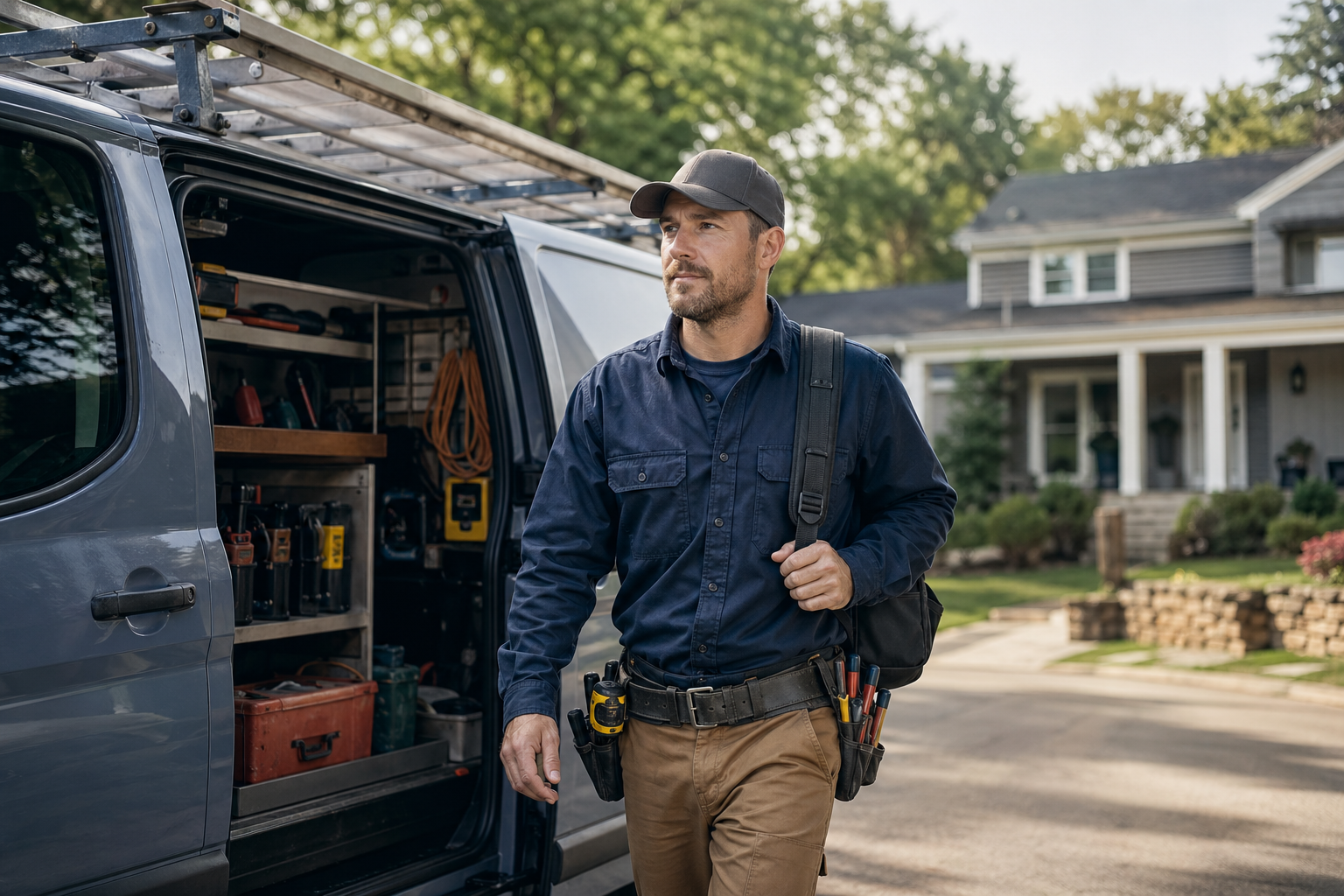
Picture an electrical service shop running multiple vans across a metro area.
Calls cluster into a few loud categories: outages and partial power problems, "something feels wrong" descriptions, panel and EV charger upgrade quotes, insurance-related repairs, and recurring service work for property managers.
Peak season can look like back-to-back outages after storms, while normal weeks still carry enough volume to starve the front line if everyone is on a job site.
For after-hours realities, see after-hours call handling for small business.
What callers usually want
Most calls fall into predictable buckets.
Some callers need scheduling: estimates, installs, service windows, and callbacks for parts-related work.
Some callers need clarification: service area, licensing, what a service call includes, and how your shop handles warranty or repeat issues.
Some callers use urgent language: sparking, burning smell, shock risk, water near power, or unexplained partial power loss affecting safety systems.
Some callers are comparing shops and will move on if the first impression sounds disorganized.
Where the phone breaks down for electrical contractors
In this scenario, the shop struggles with a few repeating problems.
Calls go unanswered during dispatch crunch and technician callbacks.
Voicemail misses the details electricians need quickly: accurate address, which parts of the home are impacted, panel age cues, whether children or medical equipment depend on steady power.
Front desk interruptions create uneven customer experience: great on site, weak on follow-through.
After hours, callers may still infer urgency from discomfort and worry. Silence feels unsafe, even when truly emergency response requires your defined escalation path rather than improvised DIY guidance.
Related trade write-ups for comparison: HVAC company use case and plumbing business use case.
What a strong front line sounds like in this context
Callers often want reassurance that someone competent is involved: they reached your business, the issue is categorized at a intake level, and the next step is clear.
Strong intake avoids turning the phone into informal electrical instruction.
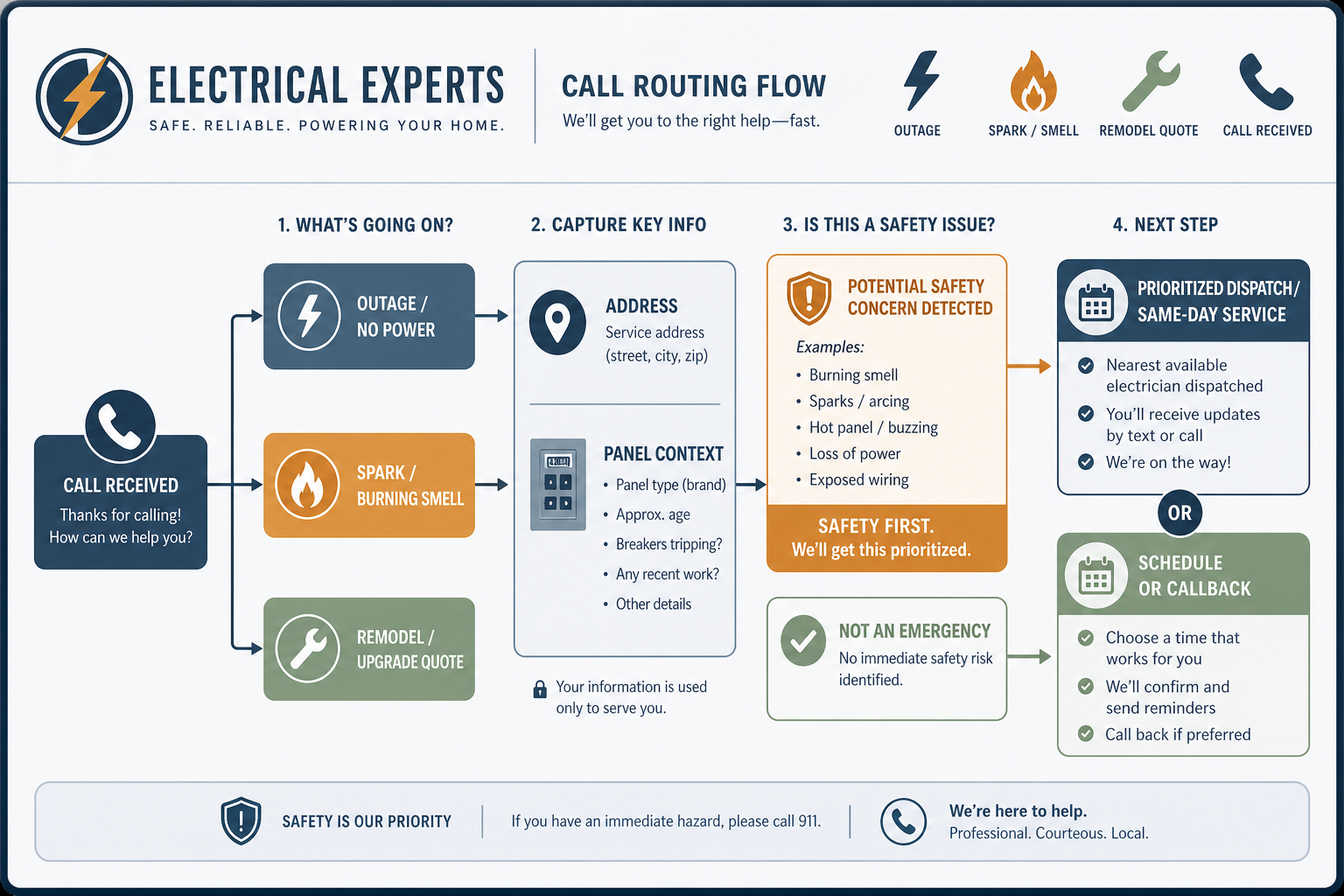
What it does do is capture clean facts, route urgency language toward your escalation path, and reduce dropped opportunities between ring and dispatcher review.
If you are newer to the AI front desk category, read what an AI front desk actually does and does not do.
How ZFire Front Desk fits an electrical contractor workflow
ZFire Front Desk centers on Ziva as a voice-forward assistant that can answer common questions, capture structured details, and route callers based on rules you define.
In an electrical contracting context, that might include:
- collecting location, brief description, and whether power is fully out or partial
- capturing safety-related language and routing it based on your policy
- helping callers understand how to start a quote or service request under your office rules
- supporting after-hours coverage so fewer calls land on a generic mailbox with no next step
What it does not do is replace an electrician. It does not diagnose failure modes over the phone, instruct unsafe workarounds, or promise arrival times your dispatch has not confirmed.
Your team still owns safety decisions, scope, pricing, code compliance assumptions, and what can be deferred versus escalated tonight.
Honest boundaries build trust faster than heroic promises.
Escalation that matches real-world risk
The best setups make escalation obvious when language indicates potential shock risk, fire risk, or medical dependency on power.
Your policy might route those calls to an on-call line, an emergency services recommendation when appropriate, or a clear "we will call you back within X minutes" workflow that your office can actually keep.
For non-emergency quote calls, the win is often cleaner capture and fewer missed opportunities.
How to evaluate fit for your shop
Useful questions include:
- what percentage of revenue depends on fast response during outages
- how often incomplete voicemail delays dispatch
- what facts your dispatchers need on every call
- which situations must always reach a human immediately
For workflow detail, read how it works. For packaging, see pricing.
Take the next step
If you want to explore whether ZFire Front Desk could match your call patterns and dispatch rules, contact ZFire Media.
If you want to hear how Ziva sounds first, visit the homepage and talk to Ziva.
Learn more about ZFire Media and how we work with call-heavy small businesses.