Plumbing Business Use Case: How an AI Front Desk Handles Real Calls
This is a practical use case written for plumbing and pipe-and-drain businesses that live on the phone.
It is a composite scenario, not a single named company. The goal is simple: show how an AI front desk can fit real trade workflows without pretending technology dispatches trucks or replaces human judgment on the job.
The business in this example
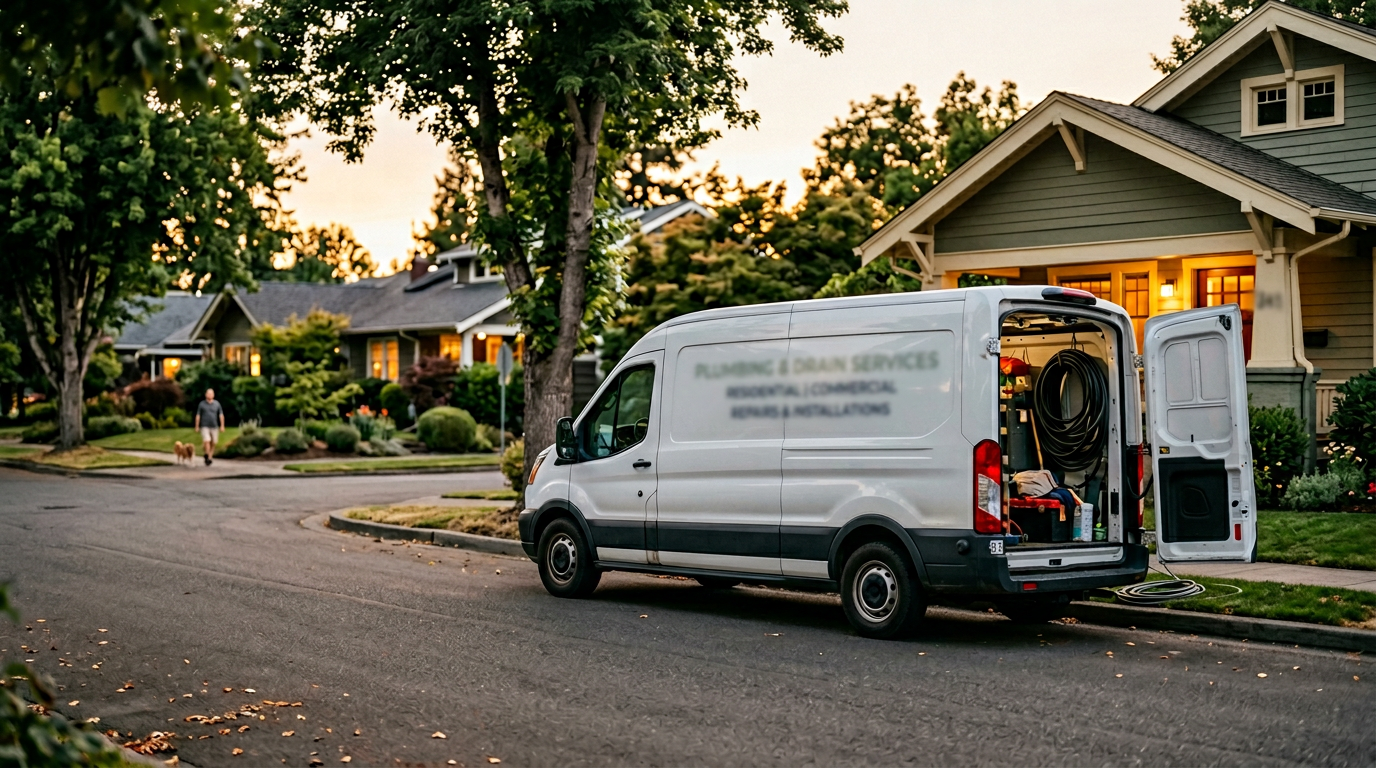
Imagine a three-truck plumbing shop serving a metro area.
The owner runs jobs, quotes bigger work, and still gets pulled into scheduling chaos. Two lead techs are in the field most days. The office line forwards to whoever can grab it, and after hours the phone often lands on voicemail.
That pattern is common. It is also where revenue leaks: missed calls, vague messages, and homeowners who move on to the next name in the search results.
If you want the broader picture on missed calls, read why small businesses lose revenue when calls go unanswered.
What a typical week looks like
Calls cluster in predictable ways.
Weekday daytime rings are often scheduling, billing questions, and "can you come look at this" requests that are urgent to the homeowner but not always a true emergency.
Evenings and weekends bring a different mix: active leaks, water heater failures, and panic calls where the homeowner needs reassurance and a clear next step.
After-hours coverage is not only a convenience problem. It is a trust problem. For more on that angle, see after-hours call handling for small business.
Where the phone breaks today
In this scenario, the shop struggles with three recurring failures.
First, calls ring out when everyone is on a job or driving.
Second, voicemail captures incomplete information. Address, access details, and whether water can be shut off might be missing, which forces callbacks and slows response.
Third, every caller wants to feel like their situation matters, but the team cannot give every ring the same live attention without burning out.
What "good" looks like on the front line
A strong front line for plumbing is not about sounding fancy. It is about fast clarity.
A caller should quickly understand:
- they reached the right business
- what information you need to help them
- what happens next, including realistic timing
- when a situation requires escalation to a human or an on-call tech
That is the same job a disciplined human receptionist does well. It is also the kind of structure an AI front desk can support when configured around your rules.
If you are new to the category, start with what an AI front desk actually does and does not do.
How ZFire Front Desk fits this plumbing workflow
ZFire Front Desk is built around Ziva as a voice-forward assistant that can answer common questions, capture structured intake details, and route callers based on how you want calls handled.
In a plumbing context, that might include:
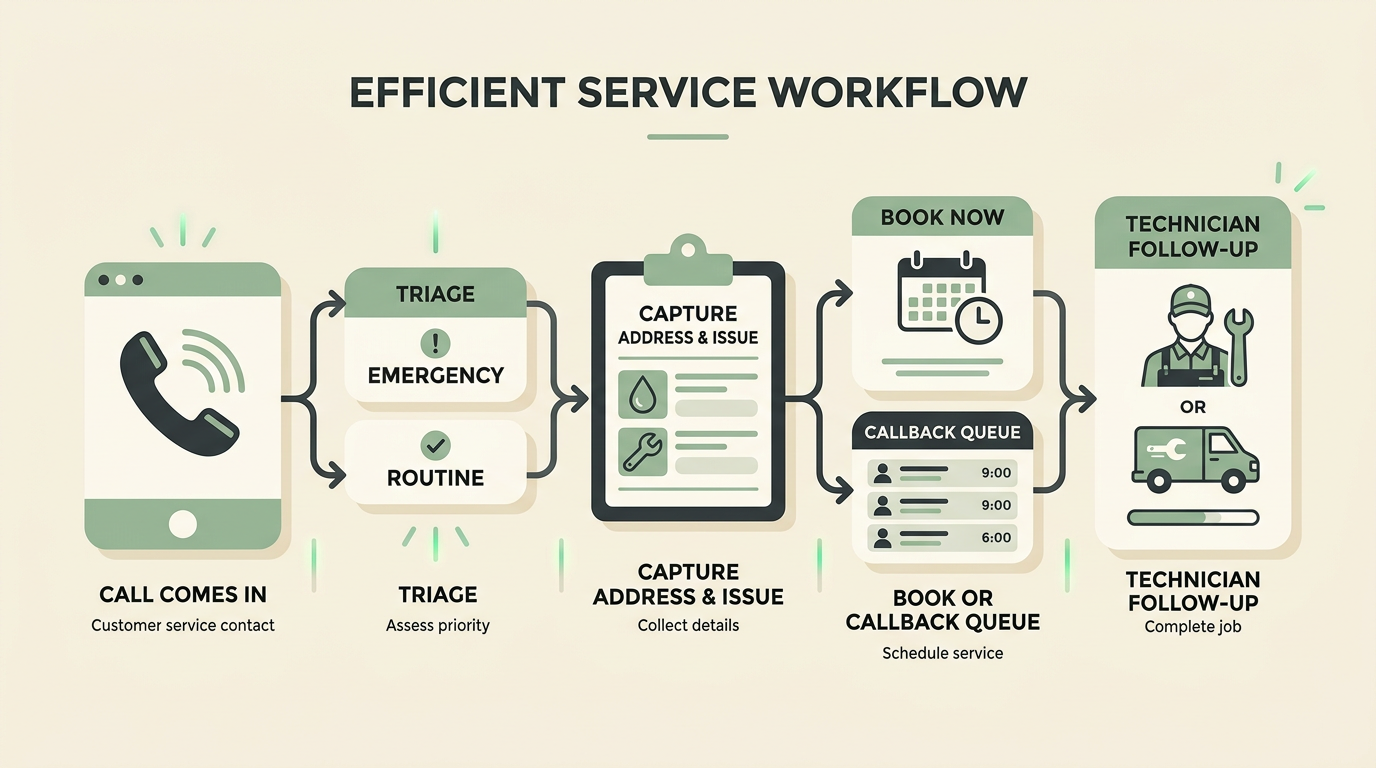
- collecting address, brief issue description, and whether water is actively leaking
- distinguishing "needs triage now" from "can book a window"
- routing urgent language toward your on-call path based on your policy
- capturing non-urgent requests for next-day scheduling follow-up
What it does not do is replace your dispatch decisions. It does not magically know truck locations, parts inventory, or whether a tech can realistically arrive in thirty minutes. Your business still owns promises, pricing, and safety-critical judgment.
Honest boundaries tend to increase trust, not reduce it.
Escalation and follow-up that match reality
The best implementations make escalation obvious.
If a caller describes a major active flood or a gas smell, your policy might require immediate transfer, a direct on-call number, or an emergency line. An AI front desk layer should support that path cleanly rather than improvising.
For routine calls, the win is often cleaner capture and fewer dropped threads: fewer "we tried to call back but the number was wrong" moments.
How to evaluate fit for your shop
If your shop is similar to this composite scenario, useful questions include:
- what percentage of calls happen after hours
- how often voicemail fails to capture what your techs need
- what information your techs repeat on every callback
- what rules you want enforced every time, without variation
If you want workflow detail, read how it works. For packaging, see pricing.
Take the next step
If you want to explore whether ZFire Front Desk could match your call patterns, contact ZFire Media.
If you want to hear how Ziva sounds before a conversation, visit the homepage and talk to Ziva.
Learn more about ZFire Media and how we work with call-heavy small businesses.