After-Hours Call Handling for Small Business, What Actually Works
If you run a small business, you probably built your day around "normal hours."
Customers did not get the memo.
They call when they are off work, when the kids are asleep, when the leak gets worse, when anxiety spikes, or when they finally have a quiet minute to handle life admin.
That means some of the most important calls show up after 5:00, on weekends, and on holidays when your team is not sitting at the front desk.
This article is not about shaming anyone for being closed. It is about being honest about what works, what fails, and what customers actually expect when they reach out after hours.

Why after-hours gaps matter
An after-hours gap is not just "we are closed."
It is a window where intent is real, timing is fragile, and the next business that responds credibly can win the relationship.
For service businesses, professional offices, clinics, and home-trade companies, after-hours calls are often tied to:
- problems that feel urgent to the customer
- scheduling needs that do not fit a 9-to-5 life
- comparison shopping when people finally have time to think
- emotional decisions where reassurance matters
If the experience feels like a dead end, you may never get a second chance to make the case.
For a broader look at how unanswered calls translate into missed opportunity, read why small businesses lose revenue when calls go unanswered.
Common after-hours methods (and where they break down)
Most businesses pick one of a few approaches. Each has tradeoffs.
Voicemail
Voicemail is cheap and easy. It is also a frequent drop-off point.
Some callers will not leave a message. Others leave incomplete details. Many expect a callback timeline that your team cannot consistently meet.
Voicemail can work when the goal is simply "leave us a note." It works less well when the caller needs clarity, reassurance, or a next step tonight.
Forwarding to a cell phone
Forwarding can help a motivated owner stay reachable. It can also create burnout, inconsistent quality, and interruptions during family time.
It also scales poorly. The person answering may not have the same information as your front desk, which creates uneven service.
Answering services and call centers
Human answering services can be excellent when well trained on your business. They can also be expensive, variable, and dependent on scripts that do not match how you actually operate.
Quality depends heavily on setup, training, and ongoing management.
Doing nothing special
Sometimes the phone just rings, goes to a generic message, or fails to communicate what happens next.
That is the most expensive option in disguise, because it trains customers that reaching you is unreliable.
What customers usually expect (even when they are unreasonable)
Customers are not all the same, but a few expectations show up again and again.
They want to feel heard quickly, even if you cannot solve everything immediately.
They want a clear next step: what you can do now, what requires a person, and when follow-up should happen.
They also compare you to the last great experience they had somewhere else, even if your business is smaller and your resources are tighter.
You cannot satisfy every expectation every time. You can still avoid the worst failure mode: the call that goes nowhere.
How ZFire Front Desk supports after-hours coverage
ZFire Front Desk is designed around a simple idea: coverage should be consistent, bounded, and aligned with how your business actually works.
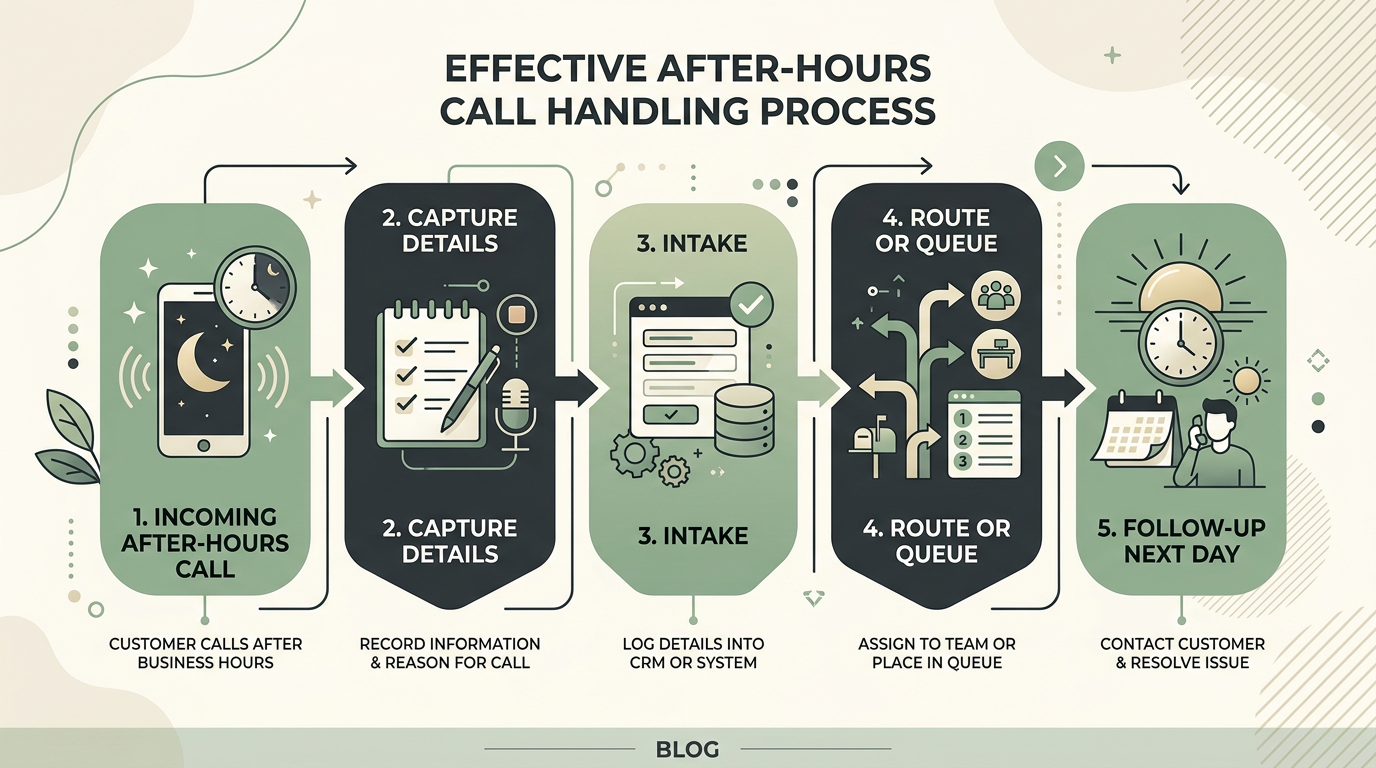
Ziva can answer calls outside normal hours, handle common questions within guardrails you set, capture structured intake details, and route callers toward booking, callback, or escalation paths that match your workflow.
This is not a promise that AI replaces your judgment. It is a practical way to reduce the gap between "someone reached out" and "we can respond intelligently."
If you are new to the category, start with what an AI front desk actually does and does not do.
For setup and workflow detail, see how it works.
When escalation or next-day follow-up is appropriate
Some situations should not be "handled" by automation alone.
High-stakes health concerns, safety emergencies, legal issues, billing disputes, or emotionally charged situations may need a human quickly. The right system helps you identify urgency, capture facts, and route appropriately instead of pretending every call is routine.
For everything else, next-day follow-up can be perfectly acceptable if the caller understands the timeline and trusts the handoff.
Honesty builds more trust than a polished script that overpromises.
If you want packaging and scope context, read our pricing overview.
Take the next step
If after-hours calls are a recurring stress point, it is worth mapping what callers need and what a front line can realistically do.
Contact ZFire Media to talk through your patterns and options.
If you want to hear the experience first, visit the homepage and talk to Ziva.
Learn more about ZFire Media and how we work with call-heavy small businesses.