HVAC Company Use Case: Emergency Calls, Scheduling, and an AI Front Desk
This is a practical use case for heating and cooling companies that live on the phone.
It is a composite scenario, not a named shop. The goal is to show how an AI front desk can support HVAC call workflows without replacing dispatch judgment, technical diagnosis, or the realities of truck rolls and parts availability.
If you want the broader revenue angle on missed calls, read why small businesses lose revenue when calls go unanswered.
The business in this example
Imagine a residential HVAC shop running multiple service vans across a metro area.
Dispatch coordinates technicians. The office handles billing and membership maintenance plans. Meanwhile the phones never really stop: no-heat calls in winter, AC-out calls in summer, tune-up scheduling, warranty questions, and homeowners who are stressed because comfort feels urgent even when the situation is not truly an emergency.
That noise is expensive. It burns out whoever is answering. It also creates drift: vague voicemails, incomplete addresses, and callbacks that arrive too late.
For after-hours dynamics specifically, see after-hours call handling for small business.
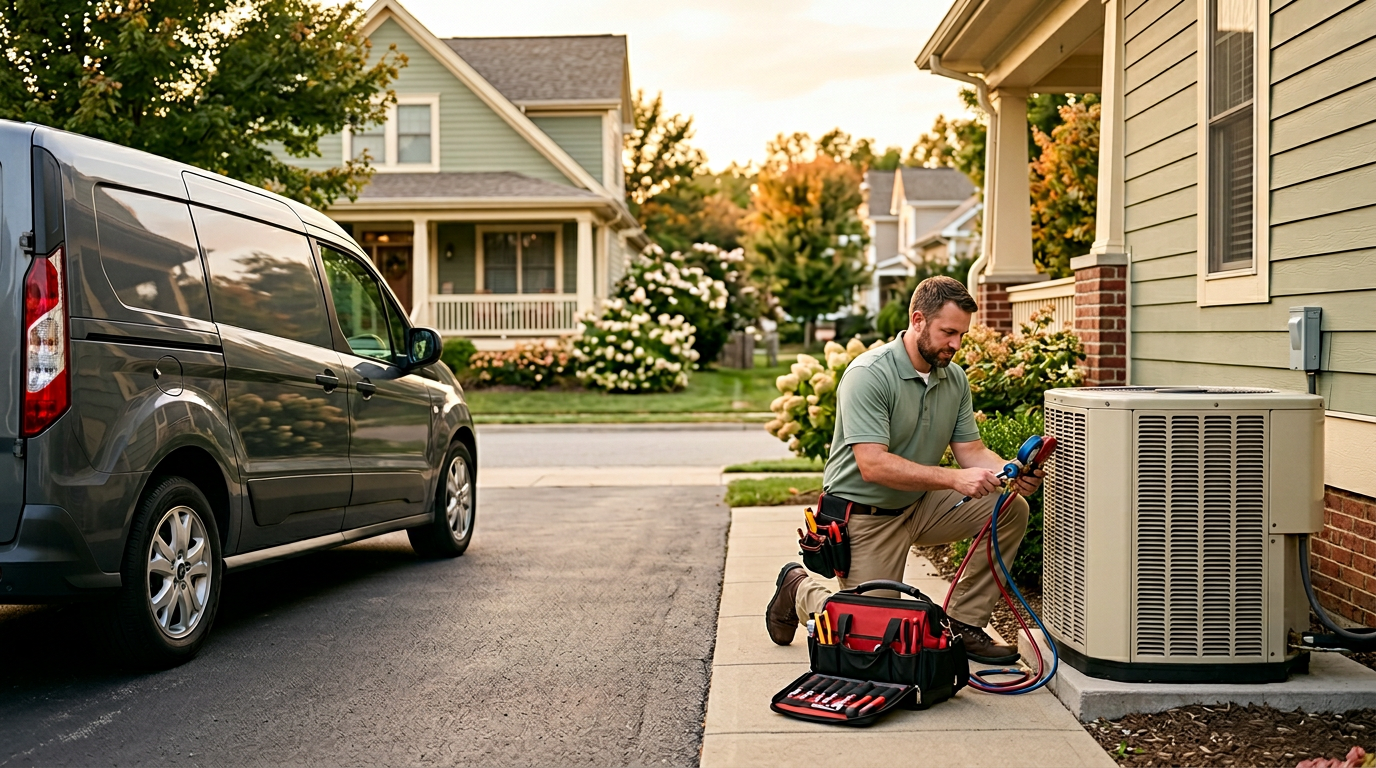
What callers want in real HVAC moments
Most calls fall into a few buckets.
Some callers need scheduling: seasonal tune-ups, filter shipments, membership visits, or routine repairs when timing is flexible.
Some callers sound urgent: extreme indoor temperatures, vulnerable household members, water near equipment, or odd smells that could indicate a safety concern.
Some callers need clarity: pricing ranges, service area boundaries, what your visit includes, and how soon someone can realistically respond.
The phone job is not to solve the equipment over the line. The phone job is to capture intent cleanly and route urgency appropriately.
Where phone systems break down for HVAC shops
In this scenario, the shop struggles with predictable failure modes.
Calls ring out during peak seasonal demand.
Voicemail loses detail. "Call me back" without address, system type, or whether heat is totally out creates expensive chaos on the dispatch side.
Front desk staff get interrupted during check-in calls from techs and customers standing in front of them.
After hours, homeowners compare you to whoever answers first. If your competition sounds organized, you lose the chance to even explain your process.
If you want a parallel trade write-up for comparison, read our plumbing business use case.
What "good" looks like on the HVAC front line
Strong intake sounds boring in the best way: fast, structured, calm.
Callers should understand they reached the right company, what information you need next, and what happens after this call ends.
That is the same outcome a disciplined dispatcher-minded receptionist produces. It is also what an AI front desk can support when configured around your operating rules.
If you are newer to the category, start with what an AI front desk actually does and does not do.
How ZFire Front Desk fits this HVAC workflow
ZFire Front Desk centers on Ziva as a voice-forward assistant that can answer common questions, capture structured intake details, and route callers based on policies you define.
In an HVAC context, that might include:
- collecting address, brief equipment context, and whether there is heat or cooling loss
- distinguishing "needs priority review" language from routine scheduling requests
- routing safety-related language toward your escalation path based on your standards
- supporting after-hours coverage so fewer calls hit a generic mailbox with no next step
What it does not do is replace dispatch. It does not know which tech is closest, what parts are on the truck, or whether you can honor a specific arrival window tonight. Your team still owns realistic promises.
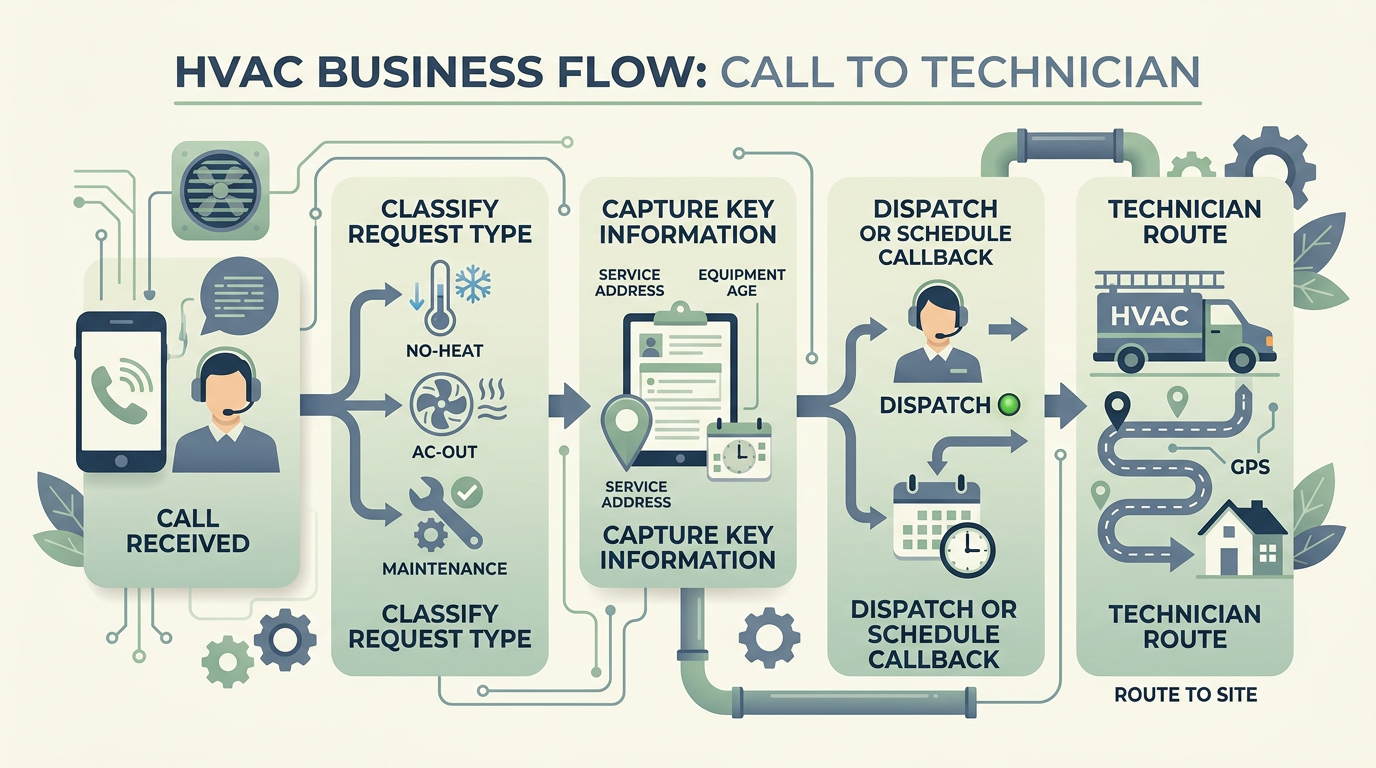
Honest boundaries that protect trust
Homeowners hate feeling misled more than they hate waiting.
If your policy requires an on-call manager for true emergencies, your phone layer should support that path cleanly rather than improvising certainty.
If your policy is "we book next available unless criteria X is met," that should be reflected consistently so every caller gets the same baseline experience.
How to evaluate fit for your shop
Useful questions include:
- what percentage of revenue is tied to rapid response vs planned maintenance
- how often incomplete voicemail delays dispatch
- what facts your dispatchers need every time, without exception
- how after-hours coverage affects reviews and referral behavior
For workflow detail, read how it works. For packaging, see pricing.
Take the next step
If you want to explore whether ZFire Front Desk could match your call patterns and dispatch rules, contact ZFire Media.
If you want to hear how Ziva sounds before a conversation, visit the homepage and talk to Ziva.
Learn more about ZFire Media and how we work with call-heavy small businesses.