Veterinary Clinic Use Case: Pet Owner Calls and an AI Front Desk
This is a practical use case for small animal veterinary clinics and hospitals that run on the phone.
It is a composite scenario, not a named practice. The goal is to show how an AI front desk can support pet-owner call workflows without replacing veterinary medical judgment, triage decisions, or the policies your clinic already follows.
If you want the broader picture on missed calls, read why small businesses lose revenue when calls go unanswered.
The clinic in this example
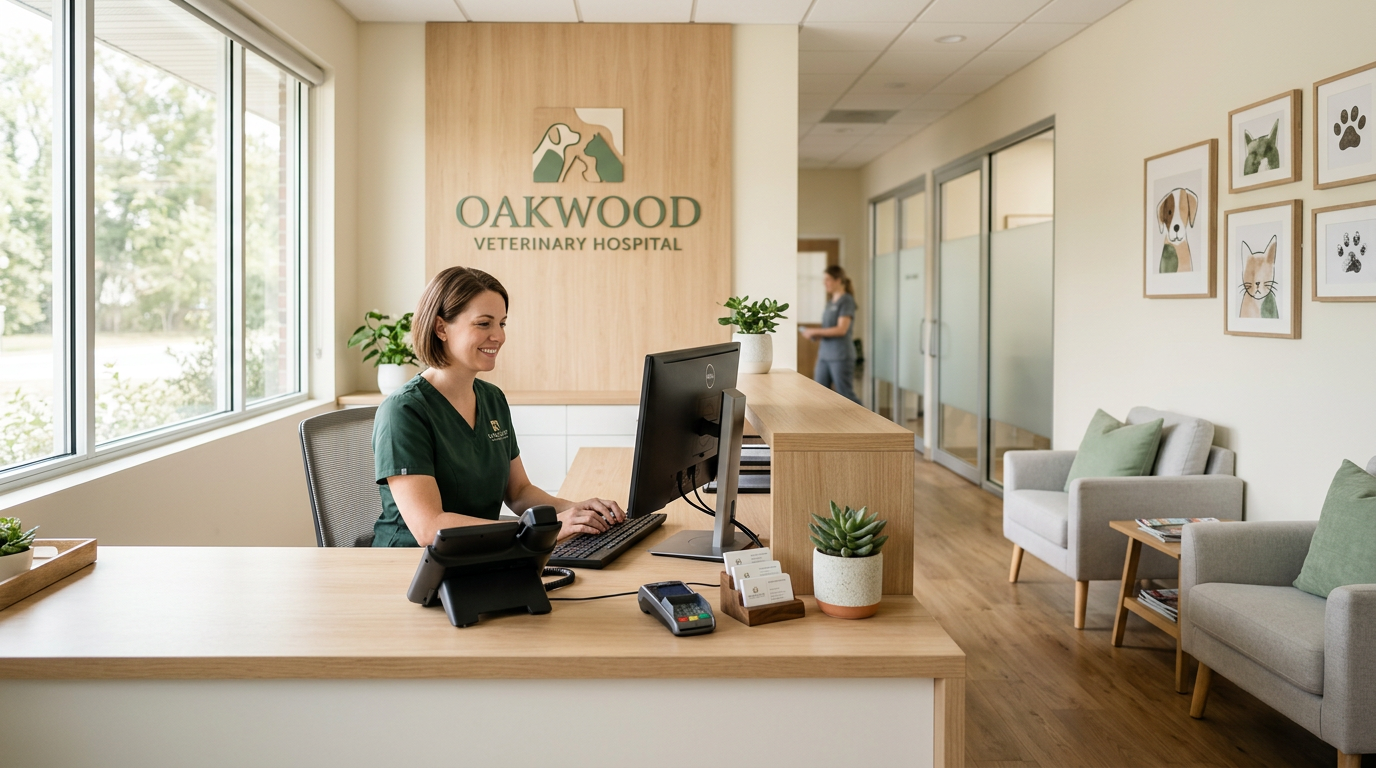
Picture a busy small animal practice with multiple exam rooms, a steady wellness schedule, and frequent same-day “something is wrong” visits.
The front desk is the air traffic control layer: checking in patients, managing pharmacy pickup, answering pricing questions, coordinating callbacks, and handling the steady stream of worried owners who describe symptoms in plain language.
Meanwhile the clinical team is trying to stay focused on the pet in front of them.
That tension is normal. It is also where small failures become expensive: unanswered rings, vague voicemail, and owners who call the next clinic that sounds calm and organized.
For after-hours dynamics, see after-hours call handling for small business.
What pet owners usually want on the phone
Most calls fall into a few buckets.
Some owners need scheduling: annual exams, vaccines, dental estimates, technician appointments, or follow-up visits.
Some need operational clarity: hours, location, what to bring, and whether you are accepting new clients.
Some calls are medication and refill related, which may require a staff or clinician workflow depending on your policy.
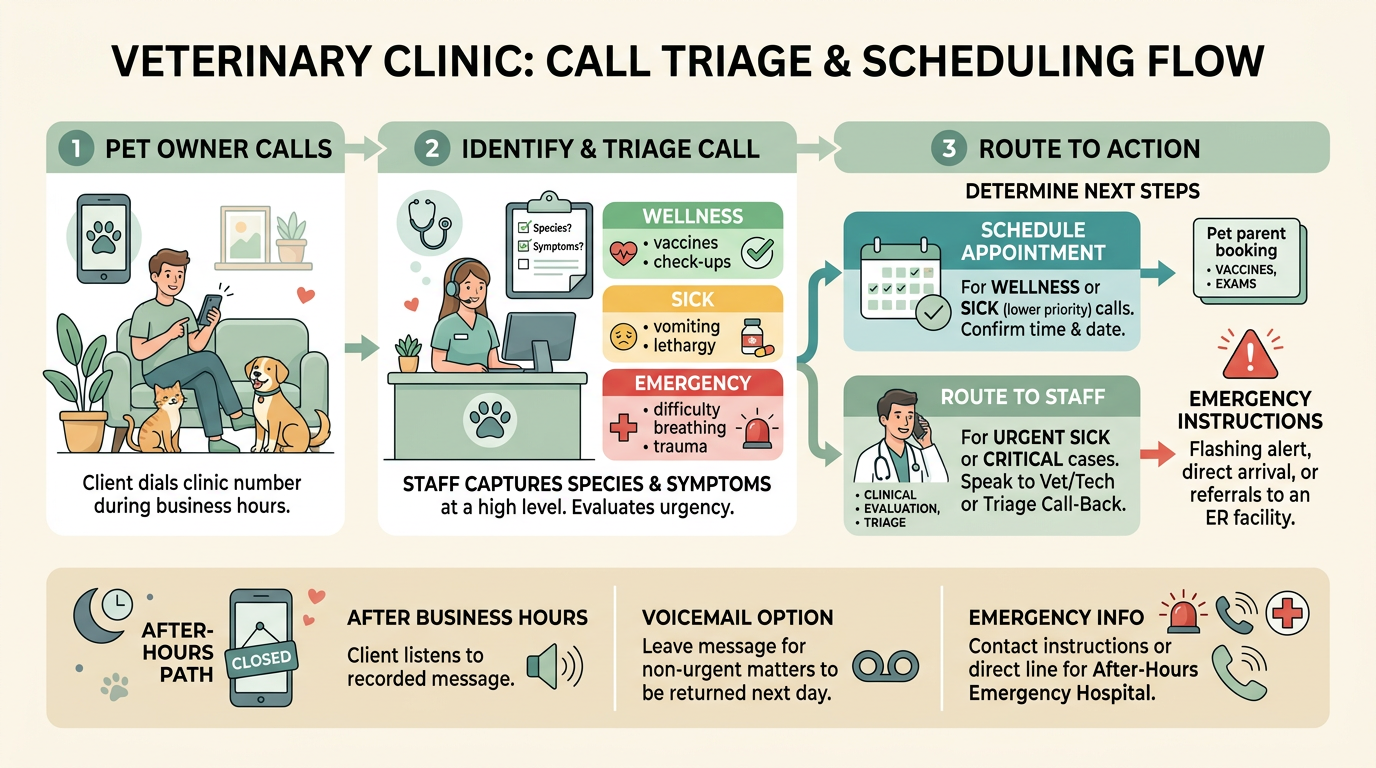
Some calls include urgent language: collapse, difficulty breathing, repeated vomiting, toxin exposure, acute pain, or bleeding. Those situations may require fast triage and a clear escalation path based on your clinic standards.
Where the phone breaks in veterinary practices
In this scenario, the clinic struggles with predictable failure modes.
Calls stack during morning drop-off and late-afternoon pickup.
Voicemail creates anxiety for owners who already feel urgency.
Front desk multitasking makes it easy to miss details: which pet, which symptom, and whether the caller is an existing client.
After hours, owners still need a coherent experience. A generic mailbox can feel like abandonment in the moment worry peaks.
For a parallel healthcare-adjacent write-up, see our dental practice use case.
What a strong front line sounds like in a veterinary context
Owners often want reassurance: they reached the right clinic, their concern is taken seriously, and there is a clear next step.
That is not the same as diagnosing a pet over the phone.
Good intake is structured: who is calling, which pet, what changed, how acute it seems, and what information your team needs to route the call appropriately.
If you are newer to the category itself, read what an AI front desk actually does and does not do.
How ZFire Front Desk fits a veterinary workflow
ZFire Front Desk centers on Ziva as a voice-forward assistant that can answer common questions, capture structured details, and route callers based on rules you define.
In a veterinary context, that might include:
- helping callers understand basic scheduling paths and what information you need for a visit
- capturing owner name, pet name or species, brief concern, and urgency language in consistent fields
- routing high-concern language toward a staff or on-call escalation path you choose
- supporting after-hours coverage so fewer calls end on a message with no next step
The exact setup depends on your clinic policies, your software workflows, and how you want medical triage handled.
What it should not pretend to do
An AI front desk should not act like a veterinarian or credentialed technician.
It should not diagnose conditions, recommend treatments, or dose medications.
It should not encourage detailed medical storytelling beyond what your clinic wants collected on a phone line, and it should not replace your documented protocols for emergencies or after-hours care.
Sensitive situations belong with trained staff or clinicians, following your clinic’s standards.
Honest boundaries increase trust, especially with worried pet owners.
Escalation that matches real clinical risk
The best implementations make escalation obvious and repeatable.
If an owner describes severe distress, breathing difficulty, toxin exposure, or other red-flag language, your policy might require immediate staff involvement or direction to an emergency facility when appropriate.
For routine scheduling and education questions, the win is often cleaner capture and fewer dropped threads between "someone called" and "the clinic can act."
How to evaluate fit for your clinic
Useful questions include:
- what share of calls happen during peak desk hours vs after hours
- how often incomplete voicemail delays care or creates repeat calls
- what facts your team needs on every intake call
- which situations must always reach a human quickly
For workflow detail, read how it works. For packaging, see pricing.
Take the next step
If you want to explore whether ZFire Front Desk could match your call patterns and clinic policies, contact ZFire Media.
If you want to hear how Ziva sounds first, visit the homepage and talk to Ziva.
Learn more about ZFire Media and how we work with call-heavy small businesses.