Real Estate Brokerage Use Case: Buyer Leads, Listings, and an AI Front Desk
This is a practical use case for small and mid-size real estate brokerages and agent teams that live on the phone.
It is a composite scenario, not a named brokerage. The goal is to show how an AI front desk can tighten lead intake and routing while keeping expectations honest—especially around availability, fair housing, and anything that only a licensed professional should answer after reviewing facts.
Nothing here is brokerage, legal, or tax advice.
If you want the broader revenue picture behind missed rings, read why small businesses lose revenue when calls go unanswered.
The business in this example
Picture a regional brokerage—or a branded team inside one—running buyer specialists, listing agents, and an inside sales associate (ISA) who chases callbacks.
Inbound calls spike around open-house weekends, fresh MLS activity, relocation seasons, rate headlines, and "I saw your sign / your ad—can someone call me?" moments.
Outbound matters too, yet the front door is still overwhelmingly phone-first for many neighborhoods and demographic mixes.
Peak weeks feel like simultaneous auctions for attention: new leads, reschedule requests, showing overlaps, earnest-money timing questions vendor partners route to agents, plus the steady drip of curiosity calls that never quite become appointments.
For after-hours behavior, see after-hours call handling for small business.

What callers usually want
Most calls fall into a few buckets.
Some callers are buyers early in search: budget talk in broad strokes, preferred areas, timing to move, and whether someone can show a property soon.
Some callers are sellers exploring a listing: general process questions, timing, and what happens before a comparative market analysis conversation.
Some callers are further along: offer strategy language, inspection timing, or vendor referrals—topics that often belong with a specific agent who knows the file.
Some callers need crisp logistics: office address, document drop-off, referral to a transaction coordinator, or confirmation that a message reached the right person.
None of those needs are unreasonable. What erodes trust is vague intake, slow callbacks, or confident answers about specific homes without verification.
Where brokerage phones typically break down
In this scenario, the team struggles with a few repeating failure modes.
Calls ring out during showing blocks, offer deadlines, and open-house windows when everyone is mobile.
Voicemail drops the metadata ISAs need: source of lead, pre-approval status (if the caller volunteers it), must-have features, whether they are under contract elsewhere, and their preferred contact window.
High-intent callers compare responsiveness; the first human touch may be your AI front desk, not an agent.
Routing by agent vacation, specialty, or ZIP gets politically sensitive fast when it is done ad hoc.
Comparable high-call verticals—with different licensing realities—appear in our med spa and dental practice use cases: same skeleton of structured intake plus human ownership of clinical or regulated advice.
What a respectful front line should do early
Strong brokerage intake avoids turning the phone into informal representation.
Early conversation can still clarify:
- that the caller reached the intended brokerage or team
- how you capture name, callback number, timeline, buyer versus seller versus other
- general office process language your broker approves—for example how showings get scheduled and who follows up
- next steps that do not promise a specific home's availability, price outcome, or financing result
Fair housing and anti-discrimination principles matter in marketing and screening. A well-configured assistant should route uniformly, avoid stereotyping neighborhoods or schools, and escalate nuanced screening questions to licensed staff who apply your broker's policy consistently.
If you are newer to the category, read what an AI front desk actually does and does not do.
How ZFire Front Desk fits a brokerage workflow
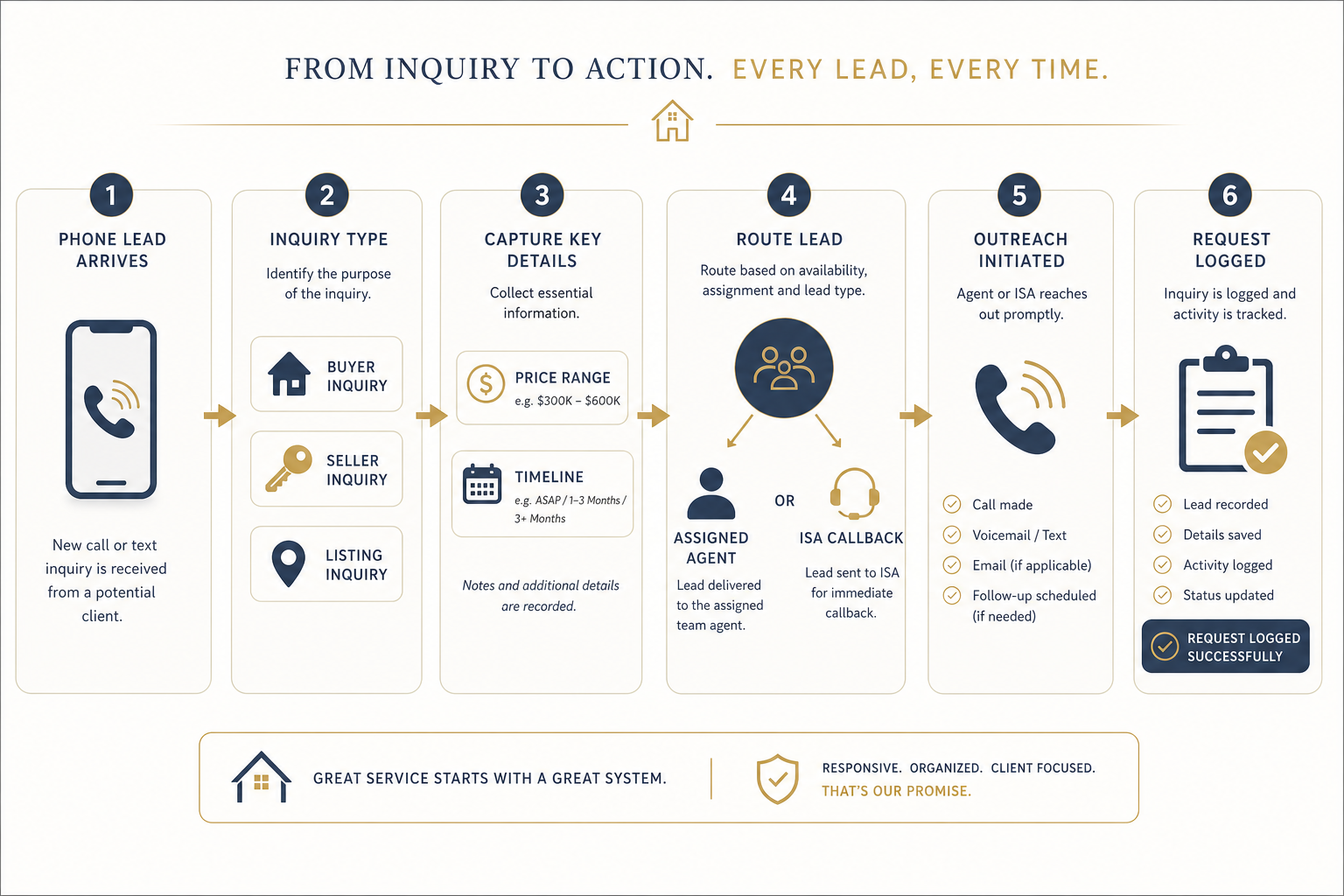
ZFire Front Desk centers on Ziva as a voice-forward assistant that answers common questions, captures structured details, and routes callers using rules your team defines with broker guidance.
In a real estate brokerage context, that might include:
- distinguishing buyer versus seller versus other intent early
- collecting contact preferences, timing, neighborhoods of interest (as described by the caller), and whether they already work with another agent—a disclosure point teams often script carefully
- logging showing requests as tickets for the assigned agent or ISA rather than improvising access details
- supporting after-hours capture so Monday morning does not begin with a backlog of "I called Saturday" regrets
What it cannot replace is agency, fiduciary context, MLS rule compliance on marketing claims, negotiation strategy, interpreting inspection reports, or any statement that implies a specific home is still available until your systems confirm it.
Your agents and broker still own representation, disclosures, referral relationships, and the live transaction.
Escalation that matches deal anxiety
Some calls carry time pressure: offer deadlines, multiple-offer stress, or travel windows for out-of-town buyers.
The best setups route clear transaction-urgency language to an on-call path your team defines—without the assistant fabricating contract advice.
For pure information calls, the win is still speed: enough structure that an ISA or agent returns a prepared callback instead of replaying phone tag.
How to evaluate fit for your brokerage
Useful questions include:
- what share of closings still begin as phone-first leads
- how often voicemail delays first contact past your team's SLA
- which disclosure lines every agent insists stay verbatim
- which topics always require a broker or designated manager
For workflow mechanics, read how ZFire Front Desk works. For packaging, see pricing.
Take the next step
If you want to explore whether ZFire Front Desk fits your team's routing and compliance language, contact ZFire Media.
To hear tone and conversational coverage on your own premises, visit the homepage and talk to Ziva.
Learn more about ZFire Media and how we help call-heavy teams stay responsive.