Chiropractic Accident & Injury Practices: When the First Answer Wins the Lead
This is a practical use case for chiropractic practices that deliberately market to accident and injury callers—especially motor-vehicle and similar events where the next step is often "call a clinic today."
It is a composite scenario, not a named clinic. Nothing here is medical, legal, billing, or chiropractic advice.
If you want the revenue math behind missed rings in general, read why small businesses lose revenue when calls go unanswered.
For a broader chiropractic workflow that is not injury-specific, see chiropractic practice use case: calls, intake, and boundaries.
The business in this example
Picture a multi-doctor chiropractic office with a coordinated front desk, a case coordinator, and steady marketing toward people recently in a collision or similar injury event.
Those leads do not always behave like slow wellness searches.
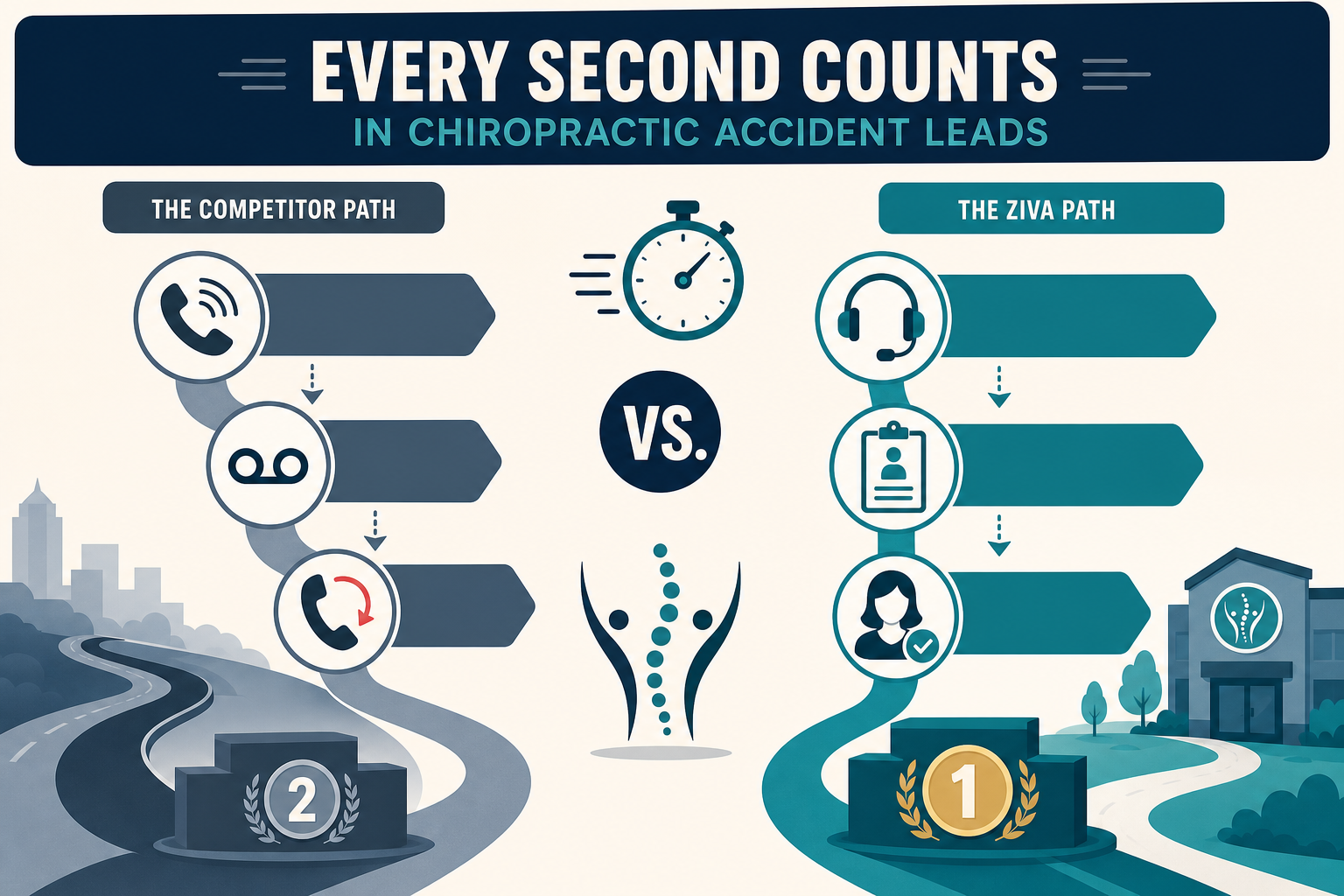
Callers may be stressed, time-pressed, researching on a phone between errands, or following a short list of clinics a third party mentioned. In that environment, speed to a competent first response is not a vanity metric—it is often the difference between a booked evaluation and a silent dial to the next office on the list.
If your phones slip to voicemail during adjusting blocks, lunch crunch, or evenings and weekends, you are not competing on clinical skill alone—you are competing on availability at the moment intent peaks.
For after-hours realities, read after-hours call handling for small business.
Why “first answer wins” shows up in injury-driven markets
In injury-driven call patterns, a few dynamics repeat.
Callers often behave as if they are in a narrow decision window: they want to know someone can see them soon, what to bring, how scheduling works, and what the polite next step is—not a lecture and not a runaround.
Comparison is frictionless. If your line does not answer, the cognitive cost of tapping the next search result or the next phone number is low.
Referral and partner dynamics can concentrate volume into short spikes: when several potential patients move in the same direction at once, the clinic with the most reliable front line tends to capture more than its “fair share” of live conversations.
That does not mean unethical pressure tactics. It means operational responsiveness is part of fair competition—especially when the alternative is a voicemail box that trains callers to keep moving.
What callers usually want on the first touch
Most first calls still cluster into practical buckets.
Some callers need fast scheduling: earliest exam slot, paperwork expectations, and confirmation they reached the clinic they intended.
Some callers need logistics: location, parking, hours, what ID or documents to bring—often phrased anxiously after a disruptive event.
Some callers want process clarity without medical claims: how your office coordinates with attorneys or insurers in general terms your team approves, always deferring specifics to in-person review.
Some callers drift into territory that belongs elsewhere: fault, case value, imaging decisions, or “do I need an attorney?” Those are not prompts for an automated front desk to improvise.
Strong intake captures the lead and the facts you allow, then routes nuance to humans who own policy.
Where injury-clinic phones quietly leak revenue
In this scenario, the practice struggles with repeatable failure modes.
Calls ring out during peak blocks when providers and staff are pulled into care.
Voicemail earns polite hang-ups because the caller’s urgency does not survive a twelve-hour delay.
High-intent leads evaporate before SOAP notes enter the conversation—because revenue in this funnel often starts as an answered phone and a booked slot, not a brilliant adjective on a billboard.
Teams forward calls to personal cells, fragment context, then lose messages between platforms.
Comparable phone-speed dynamics show up outside healthcare too—see real estate brokerage: first-touch competition—different regulations, similar “someone answered me” psychology.
If you are newer to the category, read what an AI front desk actually does and does not do.
Boundaries that protect patients and protect you
Automated intake should reinforce trust, not fake clinical authority.
Ziva should not diagnose, clear someone for activity, minimize symptoms, maximize symptoms, estimate case timelines, interpret legal strategy, or promise outcomes.
PHI collection should match your HIPAA program and scripting: capture only what you explicitly authorize at the boundary layer, escalate sensitive detail to trained staff.
Attorney and insurer topics are minefields. Safe patterns route to standardized language your clinic and counsel approve, plus a human callback for anything non-routine.
How ZFire Front Desk captures “first-call” opportunity without replacing clinicians
ZFire Front Desk centers on Ziva as a voice-forward assistant that can answer promptly, stabilize the caller experience, capture structured intake, and route by rules your team defines.
In an accident-injury chiropractic context, that might include:
- Immediate pickup pathways that shrink the voicemail gap during peak stretches and after hours
- consistent capture of name, reliable callback number, preferred appointment window, referral source if volunteered, and urgency language as described by the caller
- scripted next steps that emphasize evaluation by a licensed provider rather than reassurance-by-assertion over the phone
- routing escalation words your practice defines toward a coordinator or clinical triage pathway you approve
Your doctors and trained staff still own examination, individualized recommendations, charting nuance, and anything that resembles treatment planning or advocacy.
That division of labor is how you capture potentially lost revenue at the front door without pushing clinical judgment into automation.
What to measure when you evaluate fit
Useful prompts include:
- what share of new injury cohort patients still originate as phone-first contacts
- how often unanswered calls correlate with dropped slots in scheduling software
- your average elapsed time between first ring and structured human follow-up—and where that time hurts most
For workflow specifics, read how ZFire Front Desk works. For packaging, see pricing.
Take the next step
If your clinic competes in injury-driven intake and wants the phone treated like a conversion surface without sacrificing compliance language, contact ZFire Media.
If you want to hear how immediate coverage can sound, visit the homepage and talk to Ziva.
Learn more about ZFire Media and how we support call-heavy businesses.