Chiropractic Practice Use Case: Patient Calls and an AI Front Desk
This is a practical use case for chiropractic and musculoskeletal practices that run on the phone.
It is a composite scenario, not a named clinic. The goal is to show how an AI front desk can support patient-facing call workflows without replacing your front office staff, your clinical judgment, or the policies your practice already follows.
The practice in this example
Picture a two-doctor chiropractic office with a small front desk team.
Mornings are heavy with adjustments and re-exams. Afternoons include new patient workups and report visits. The phones still ring throughout: scheduling changes, insurance questions, new patient inquiries, and occasional callers describing new pain or concern.
That mix is normal. It is also hard to staff perfectly. When the desk is slammed, calls stack. When the office closes, callers still need a clear next step.
If you want the broader picture on missed calls, read why small businesses lose revenue when calls go unanswered.

What callers usually want
Most calls fall into a few buckets.
Some callers need scheduling: new patient availability, rescheduling, or confirmation.
Some need basic information: location, hours, what to expect on a first visit, preparation steps.
Some callers have urgency language: new symptoms, increased pain, or anxiety that sounds like it should not wait on voicemail.
And some questions touch sensitive health details that are better handled with care, consistency, and a human who knows your practice standards.
Where the phone breaks in busy clinics
In this scenario, the practice struggles with predictable failure modes.
Calls go unanswered during peak stretches.
Voicemail creates phone tag, especially for new patients who are still comparing offices.
Front desk staff get interrupted mid-check-in, which feels bad for everyone in the lobby.
After hours, the experience can feel like a dead end unless the practice has a deliberate coverage approach. For more on that pattern, see after-hours call handling for small business.
What a strong front line sounds like in a clinic context
Patients often want reassurance that they reached the right place, that their request is understood, and that there is a clear next step.
That does not mean diagnosing over the phone. It means structured intake, calm language, and predictable routing.
If you are newer to the category itself, read what an AI front desk actually does and does not do.
How ZFire Front Desk fits a chiropractic workflow
ZFire Front Desk centers on Ziva as a voice-forward assistant that can answer common questions, capture structured details, and route callers based on rules you define.
In a chiropractic context, that might include:
- helping callers understand basic scheduling paths and what information you need for a new patient visit
- capturing name, callback number, reason for visit, and urgency language in consistent fields
- routing high-concern language toward a staff escalation path you choose
- supporting after-hours coverage so fewer calls hit a generic message with no next step
The exact setup depends on your policies, your scheduling tools, and how you want clinical concerns handled.
What it should not pretend to do
An AI front desk should not act like a clinician.
It should not provide diagnosis, treatment plans, or medical advice. It should not encourage detailed protected health information sharing beyond what your practice wants collected on a phone line.
Sensitive situations belong with trained staff or licensed providers, following your practice protocols.
That is not a limitation to hide. It is a boundary that protects patients and protects your office.
Honest boundaries increase trust.
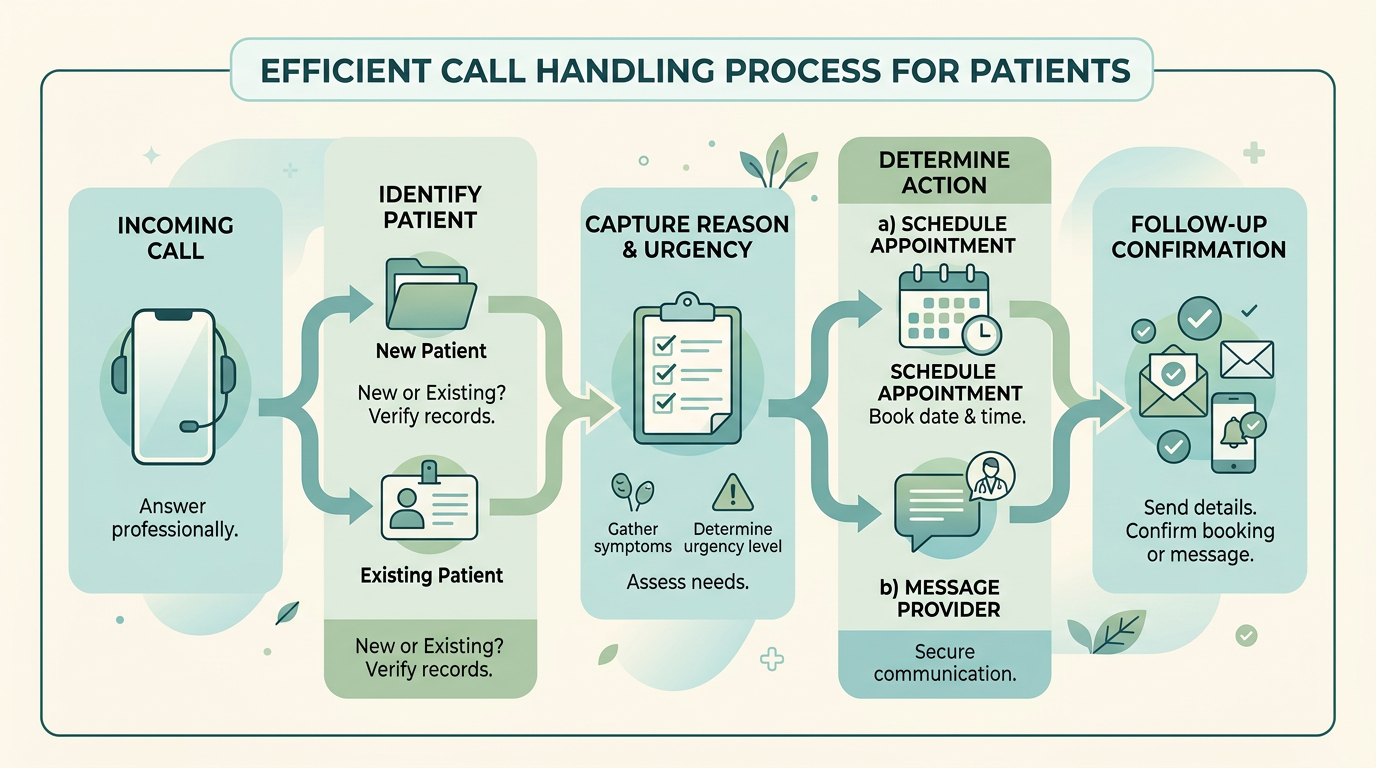
Escalation that matches real clinic risk
The best implementations make escalation obvious and repeatable.
If a caller describes red-flag symptoms or severe trauma language, your policy might require immediate transfer to a staff line, an on-call pathway, or direction to emergency services when appropriate.
For routine scheduling and education questions, the win is often cleaner capture and fewer dropped threads between "someone called" and "the office can act."
How to evaluate fit for your practice
Useful questions include:
- what share of calls happen during peak desk hours vs after hours
- how often voicemail delays new patient conversion
- what information your team repeats on every intake call
- which questions must always reach a human quickly
For workflow detail, read how it works. For packaging, see pricing.
Take the next step
If you want to explore whether ZFire Front Desk could match your call patterns and policies, contact ZFire Media.
If you want to hear how Ziva sounds first, visit the homepage and talk to Ziva.
Learn more about ZFire Media and how we work with call-heavy small businesses.