What an AI Front Desk Actually Does, and What It Does Not Do
If you have been researching phone coverage for a small business, you have probably seen the same words repeated in different fonts.
AI receptionist. Virtual front desk. Always-on voice agent.
Those labels can hide a simple problem: it is hard to buy something when you are not sure what category you are buying.
So let us define the category honestly.
An AI front desk is not a magic employee. It is a structured way to answer calls, capture details, and route people to the next step when your team is busy, off the clock, or already helping someone else.
That definition matters because trust comes from clarity, not from hype.

What an AI front desk is, in plain English
At its core, an AI front desk is a phone-first assistant that can hold a predictable conversation within boundaries you set.
It is closer to a well-trained intake layer than to a full replacement for your office manager.
Think of it as coverage for the moments where responsiveness matters most: when a call arrives during a rush, after hours, or when your staff is already on another line.
The goal is not to sound clever. The goal is to be useful quickly: answer common questions, collect the right details, and move the caller toward booking, routing, or follow-up without dropping the thread.
What it typically helps with
Depending on how it is configured, an AI front desk can support a few core jobs.
Answer
It can pick up calls that would otherwise ring out or dump straight to voicemail.
That is not trivial. Many callers never leave a message. Some simply want confirmation that they reached the right business, or that someone will get back to them with a clear next step.
Capture
It can collect structured information: name, reason for calling, appointment preferences, urgency, and basic intake details.
Good capture reduces phone tag and prevents "we called you back but we still do not know what you needed" situations.
Route
It can route callers to the right next step: a specific department, a person, a callback queue, or a scheduling workflow.
Routing is where a lot of businesses lose time today, not because people are careless, but because the system is unclear.
Schedule support
Some setups can support scheduling-related workflows, depending on how your business books work and what integrations are realistic.
This is not "AI replaces your scheduler" by default. It is often closer to: capture intent, reduce back-and-forth, and hand off cleanly when a human needs to confirm details.
After-hours handling
After-hours coverage is one of the most common reasons businesses look at this category.
Customers call when they have time, not when you have staff available. A front desk layer can provide a consistent experience when your office is closed, without pretending the office is fully staffed.
If you want a deeper look at how missed calls translate into lost opportunities, read why small businesses lose revenue when calls go unanswered.
What it does not do
Here is where honest boundaries matter.
An AI front desk is not a substitute for judgment in every situation. It is not a universal fix for broken operations. And it is not a reason to stop caring about customer experience.
It does not replace every human conversation
Some calls require nuance: conflict, fear, complex medical or legal concerns, unusual requests, or situations where tone matters as much as content.
Those calls still belong with people, or at least with a clear escalation path.
It does not magically fix bad processes
If your scheduling rules are unclear, or your team does not follow up, technology will not invent discipline.
What it can do is reduce friction at the front door so fewer opportunities die before your team even sees them.
It should not pretend to be something it is not
Callers tolerate automation far better when it is straightforward. They tend to resent it when it feels evasive.
That is why the best implementations sound like a capable front desk, not like a performance.
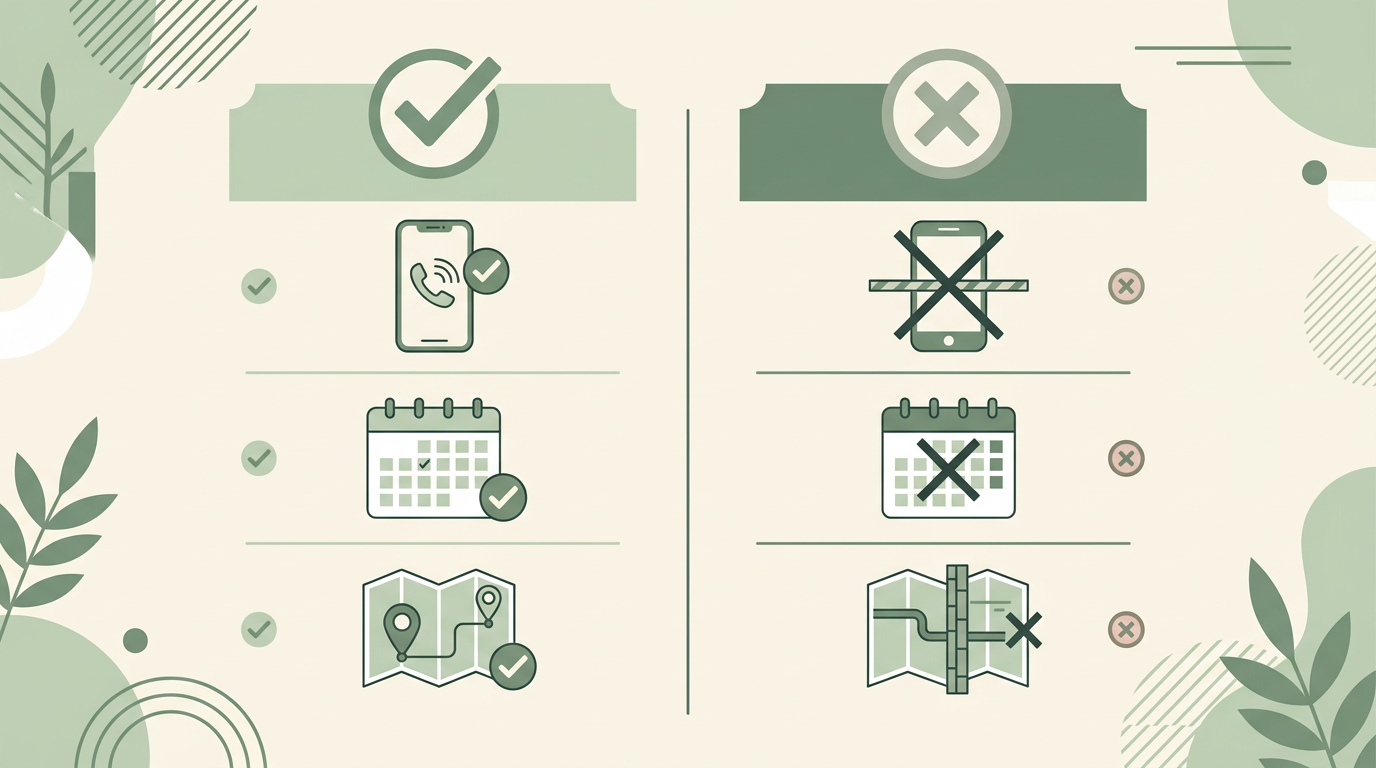
Where humans still matter
Humans matter anywhere the stakes are high, the situation is ambiguous, or the relationship is sensitive.
Your team still owns quality, follow-through, and the final call on what to promise a customer.
An AI front desk works best when it supports those humans, not when it tries to erase them from the story.
Why honest boundaries increase trust
When a vendor claims too much, skeptical buyers do the right thing: they walk away.
When a vendor is clear about what happens on the front line and what still requires a person, buyers can evaluate the fit without guessing.
That is the posture we take with ZFire Front Desk.
Ziva is designed to help businesses stay responsive in a practical way: answer common questions, capture details, route callers, and support workflows that match how you operate, without pretending every conversation can be automated.
If you want to see how the system is meant to work, start with how it works.
If you are comparing packaging and scope, read our pricing overview.
Take the next step
If you are ready to talk through what your call patterns look like and what kind of coverage would help, contact ZFire Media.
If you want to hear the experience first, visit the homepage and talk to Ziva.
For background on who we are and how we work with businesses, see about ZFire Media.